As a team, we designed Pieces to help educate youth on social and emotional learning. Our game reinforces an awareness and understanding of the impact of words and actions towards themselves and others.

Project Manager│Narrative Designer│UI Programmer
Developed in Godot


I worked in Project Management, Narrative Design & UI Programming. Throughout the project, I:
-
Led team meetings, delegated weekly tasks and guided the team through deadlines
-
Designed the storyline, dialogue, characters and game progression
-
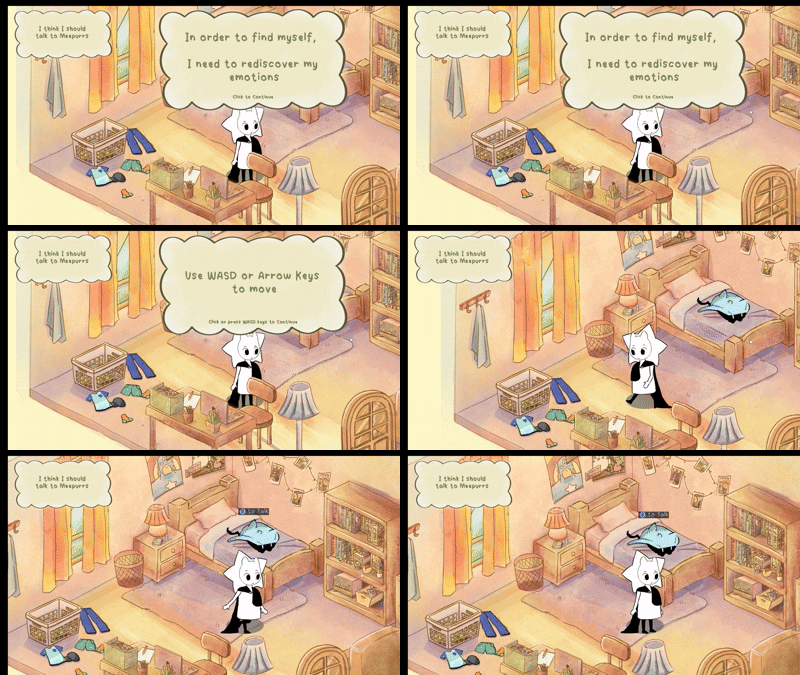
Programmed interactive and communicative UI such as the "scratch to reveal" function in the journal, task list popups and other popups containing game information
More about Pieces
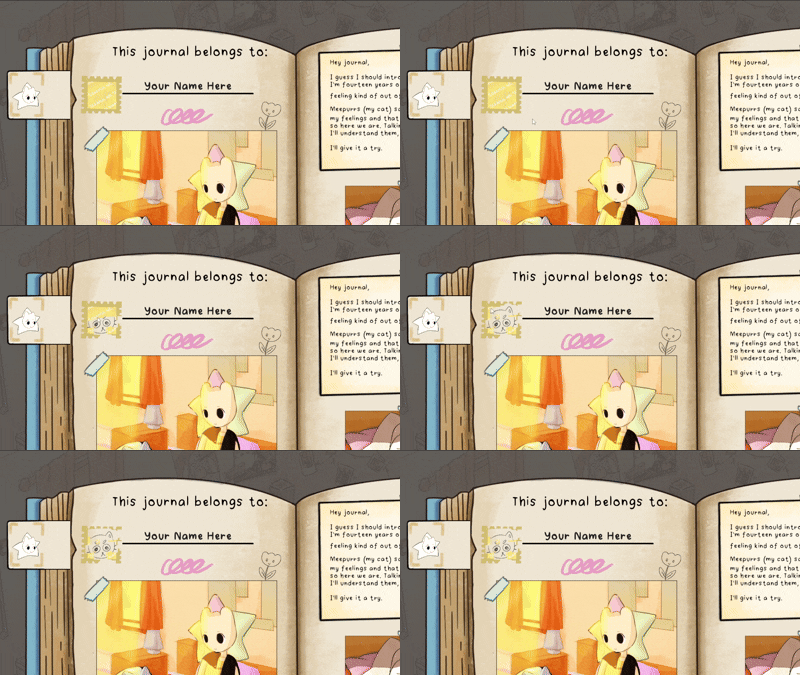
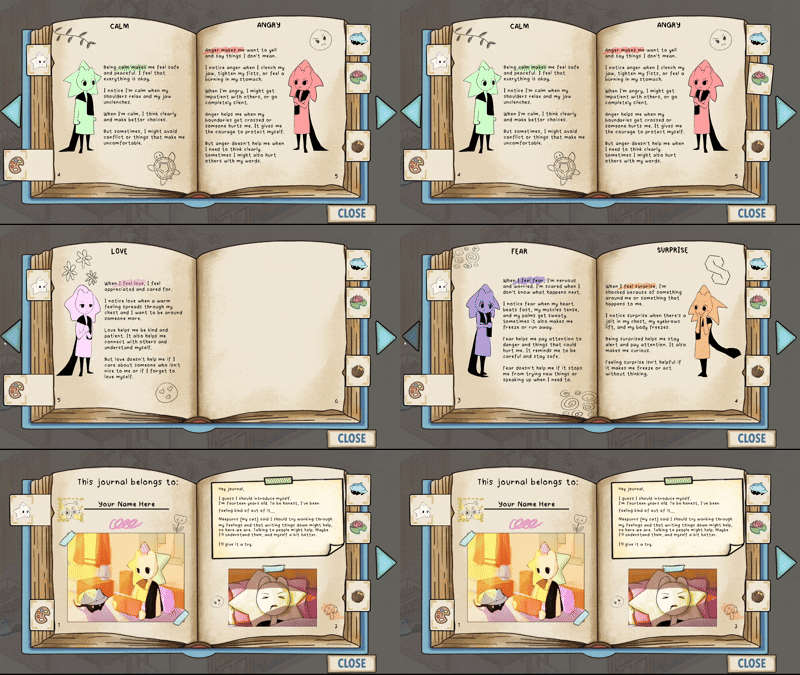
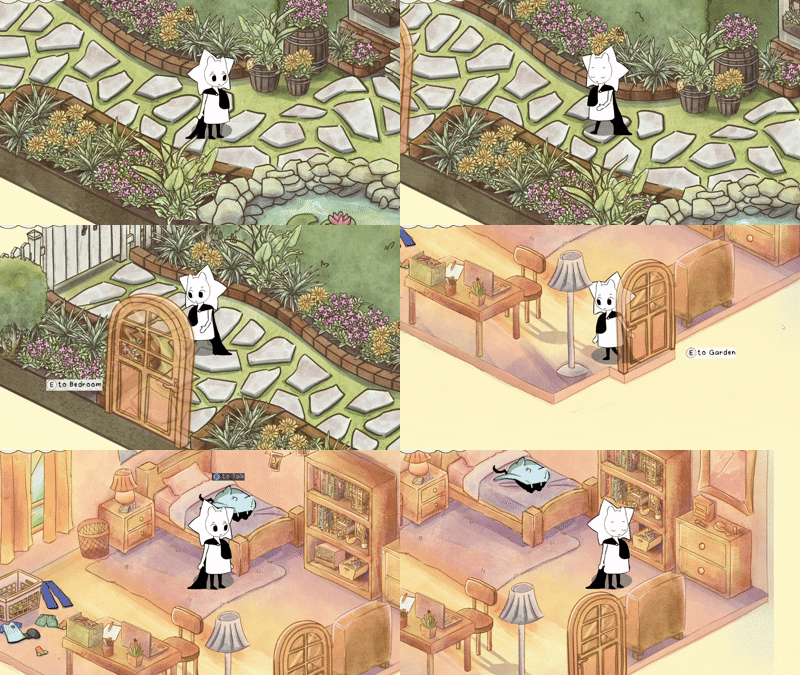
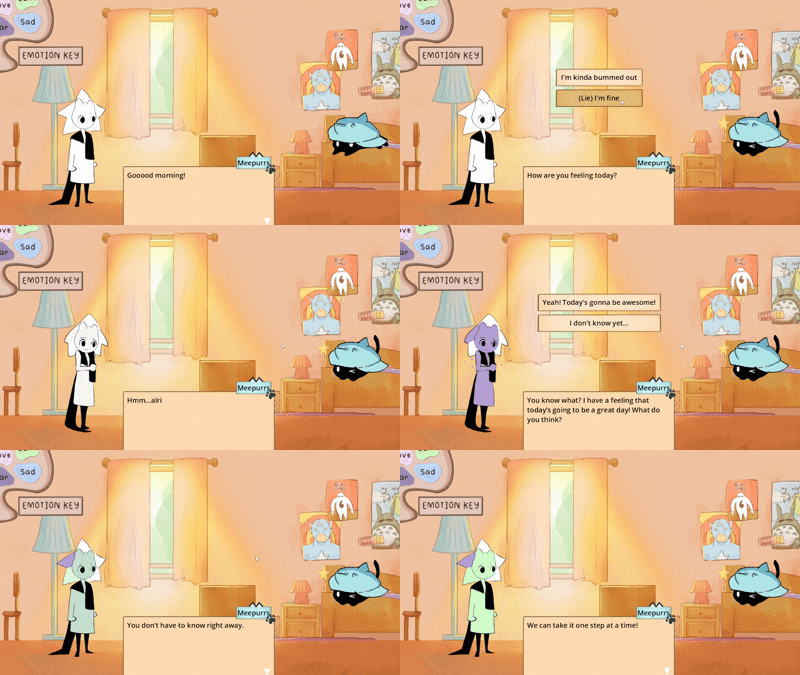
Pieces is a 2D narrative-rich experience. It's a choose-your-own-adventure game with beautiful art. It combines exploration, reading and interaction with education, allowing us to teach players about empathy and sympathy through the impact of actions. You as the player suffer from bullying and peer pressure, which causes you lose your colours. Your colours are represented through emotions that connect to your sense of self. As you continue throughout the game, you make choices which allow you to feel different emotions and understand yourself better. You catalog your experiences and learning outcomes in a journal which unlocks information based on the conversations you have. There are interactive elements in the journal that encourage participation such as the scratch to reveal function and areas for personalization including being able to write your own name.

My Contributions:

Project Management:
I delegated tasks weekly based on my team members' roles and specialities. Every week I ensured that the tasks assigned amount to 20 hour work weeks (4-7 tasks), allowing us to be efficient and productive on our project. I used Jira to structure tasks and subtasks. However, I noticed that my team didn't use Jira to look at or update their tasks. I decided to create individual task lists for each person through Discord, which I know my team checked and used regularly. This motivated my team to use the checklist in their independent Discord threads to check off their completed tasks.

Narrative Design:
I started by creating a Narrative Design Document, detailing all themes, story points and characters for the game. We referenced this document when making design decisions such as story pacing, character design and deciding next steps. It provided a guideline for what we wanted our game to be. My next step was making character templates. I designed my own templates to fill out when creating characters. Some members on my team also wanted to create characters and this template allowed them to design a character in a structured way. Now that I know the story and the characters, it's time to start writing the dialogue between the two. I started by creating a flow chart outline of what I want the conversation to look like. It accounted for all dialogue choices and varied pathing. This helped me visualize how the interaction plays out and what the key points of the conversation are. I also used Twine to prototype and simulate conversations between characters. Once the conversations were finalized, I put them into the build using Godot's Dialogic extension, which allows for simple dialogue integration. I was also responsible for accounting for NPC and player state changes including emotion changes.

UI Programming:



I contributed to multiple UI aspects of the game. I worked on interactive design by creating the scratch to reveal code. In the journal system of our game, text unlocks based on the dialogue paths you choose. Instead of the text simple appearing on a new interaction, players can "scratch" the journal to reveal the new text entry underneath. I also worked with communicative UI, making the task and goal more clear to the player. I started by making a directive popup when the game starts, giving the layer more context, which is followed by a controls popup. I also designed a task list system, which updates in correspondence with game progression.